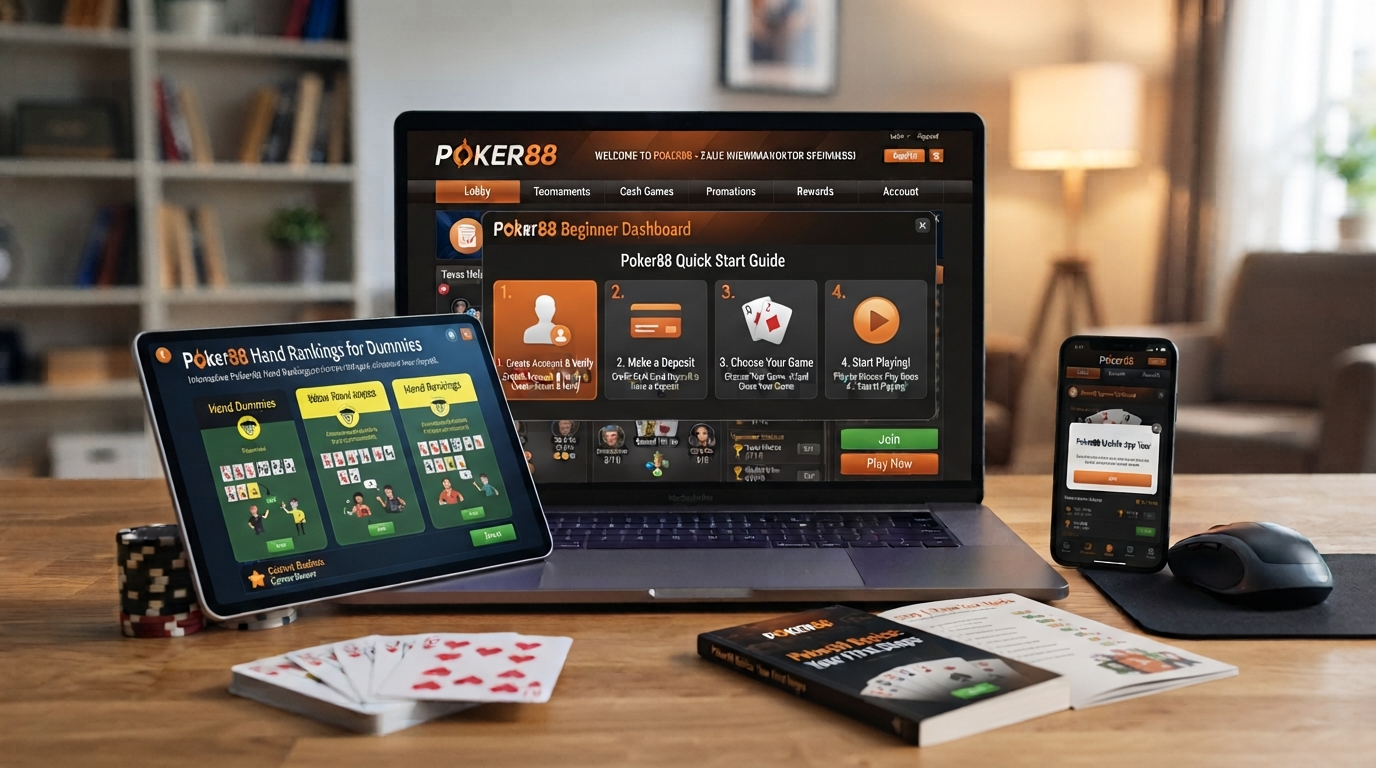
Online poker88 has become a familiar form of digital entertainment, combining traditional card-game rules with internet-based platforms. Before exploring any online poker service, it is important to understand how the game works, what is involved, and why responsible participation matters.
What Is Online Poker?
Online poker is a digital version of poker that allows players to participate through a website or application rather than sitting at a physical table. Different versions of poker use different rules, but most involve players receiving cards, making decisions during betting rounds, and attempting to form a stronger hand than their opponents.
The exact rules can vary depending on the poker variant. Texas Hold'em, for example, gives players private cards along with community cards that can be used to create a hand. Learning the rules and terminology is an important first step for anyone studying how poker works.
How Do Online Poker Platforms Work?
Online poker platforms generally provide digital tables where multiple participants can play simultaneously. Depending on the service and jurisdiction, some platforms may offer practice games, free-to-play options, or games involving real money.
A player should always check the rules, age requirements, and applicable laws before using any gambling service. Requirements can differ significantly between countries and regions. Privacy policies and payment terms are also important because online platforms may collect personal and financial information.
Why Is Responsible Gambling Important?
Poker involves chance as well as decision-making, and outcomes cannot be guaranteed. Even experienced players can lose money. This is one reason responsible-gambling practices are important for adults who legally choose to participate.
People should never gamble with money needed for food, education, housing, bills, or other essential expenses. Gambling should also not be treated as a dependable way to earn income. If gambling begins to interfere with school, work, relationships, finances, or everyday responsibilities, taking a break and seeking support can be important.
What Should Beginners Learn First?
Someone learning about poker can start with the fundamentals rather than immediately playing for money. Useful topics include hand rankings, betting terminology, probability, game structure, and the rules of specific poker variants.
Free educational materials and practice environments can provide opportunities to understand the mechanics without financial risk. Learning the difference between entertainment and income is equally important.
Frequently Asked Question: Can Poker Guarantee a Profit?
No. Poker cannot guarantee a profit. Results vary from hand to hand and session to session, and players can lose money. Claims suggesting that a particular strategy or platform can reliably guarantee winnings should therefore be treated cautiously.
Final Thoughts
Understanding online poker involves more than learning how to play cards. It also means considering age restrictions, local laws, financial risks, privacy, and responsible participation. For anyone researching the subject, learning the rules and risks first is a sensible way to develop a clear understanding of online poker without assuming that gambling will produce financial returns.